

I'll be honest with you, I'm writing this blog post with the help of AI. As someone with dyslexia, I've always steered clear of writing blogs and social media posts. The fear of making mistakes, the time it takes to get my thoughts down clearly, and frankly, the embarrassment of potentially getting it wrong has kept me quiet for years. But AI has changed that for me.
Over the past year, I've been using AI tools to help me communicate more effectively at work. Whether it's drafting emails, creating presentations, or yes, writing blog posts like this one, AI has become my writing companion. It doesn't think for me, but it helps me get my thoughts out in a way that's clear and polished. And that's got me thinking: if AI is already making such a positive impact on my professional life, where does this all lead?
AI in Business: The Reality Check
Don't get me wrong, AI isn't perfect. In my work, I've seen it make mistakes, misunderstand context, and sometimes produce responses that are just plain wrong. Recent studies suggest that whilst over 80% of businesses are exploring AI strategies, many are still grappling with implementation challenges and trust issues. AI requires constant management, fact-checking, and human oversight. It's brilliant at handling routine tasks, analysing data patterns, and helping with creative processes, but it's far from being able to replace human judgement, especially when it comes to understanding emotions and complex business relationships.
But here's what's fascinating me lately: AI by 2025 already touches over 3.5 billion lives daily, and that's just the beginning. We're seeing it creep into business processes everywhere: automating customer service, helping with decision-making through data analysis, and even assisting people like me who've traditionally avoided certain tasks due to personal challenges.
The Big Question: What Happens at Home?
This brings me to the question that's keeps popping up in my mind: how will AI creep into our personal and family lives? And more importantly, are we ready for it?
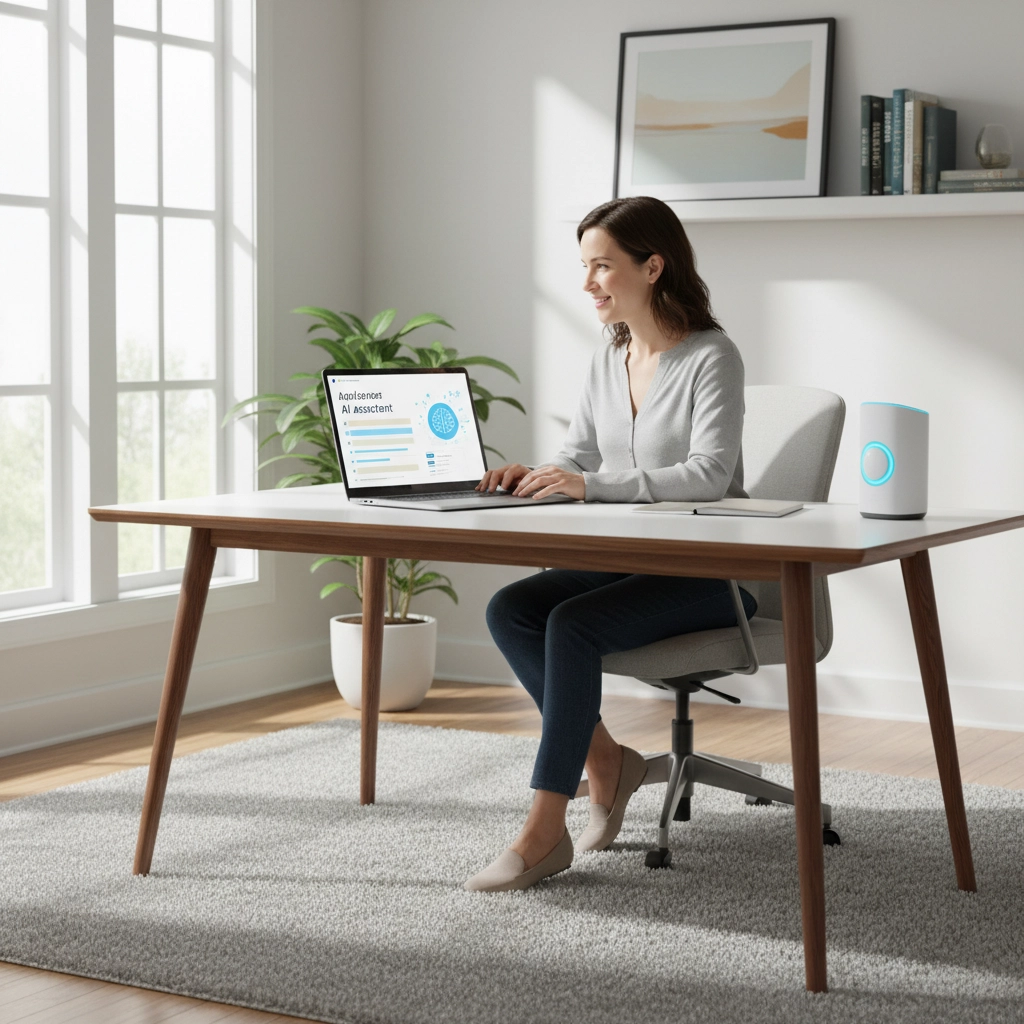
I'm starting to see the early signs everywhere. Smart thermostats that learn our daily routines, fridges that track our food inventory, and virtual assistants that remember our preferences better than we do sometimes. But I think we're only scratching the surface.
Will we rely on AI to manage our family schedules? I can already imagine an AI system that knows my work commitments, my partner's appointments, the kids' school events, and seamlessly coordinates everything. No more double-booked evenings or forgotten parents' evenings. It sounds brilliant, doesn't it? But what happens when the system gets it wrong, or when we become so dependent on it that we lose the ability to manage our own time?
The Family Holiday Planner
What about holidays? Will AI research and book our family trips? I can see the appeal: an AI that knows we prefer quiet beaches over crowded cities, remembers that one of the kids is vegetarian, and factors in our budget constraints whilst finding the perfect family getaway. It could compare thousands of options in seconds, read reviews, check weather patterns, and even book activities that match our interests.
But here's where I get a bit uneasy. Part of the joy of planning a holiday is the anticipation, the research, the discussions about where to go. If AI does all of that for us, do we lose something essentially human about the experience? And what if its recommendations are too safe, too predictable? Sometimes the best holidays come from taking a chance on something unexpected.

The Weekly Shop Revolution
Then there's the weekly shopping. AI could easily handle this: tracking what we eat, when we run out of things, our dietary preferences, and our budget. It could order everything automatically, ensuring we never run out of milk or toilet paper again. Some families are already doing versions of this with smart fridges and automatic reordering systems.
But I wonder if we're losing something here too. The spontaneous decision to try a new recipe, the discovery of a product you'd never considered, or even the simple social interaction of chatting to the local shopkeeper. Will AI make our lives more convenient but less serendipitous?
Dating in the Age of AI
This might sound far-fetched, but I genuinely wonder if AI will change how people date and form relationships. We're already seeing AI-powered dating apps that learn from our swipes and conversations to suggest better matches. But could AI go further? Could it analyse communication patterns to predict compatibility, or even help people craft better messages?
I can see both sides of this. For people who struggle with social interaction (much like I struggle with writing), AI could be incredibly helpful. But there's something about human connection that feels like it should remain genuinely human. The awkward first conversations, the gradual discovery of shared interests, the unpredictability of attraction: can AI really understand and facilitate these complex emotional processes?
The Robot in Every Home
And then there's the big question that feels like science fiction but might not be: will every household end up with an AI robot like in the TV series "Humans"? The show depicted humanoid robots handling household chores, childcare, and even emotional support. How far off into the future is that scenario?
Current AI-powered devices like robotic hoovers are already learning our home layouts and cleaning patterns. Voice assistants are becoming more sophisticated at understanding context and managing smart home devices. We're not that far from AI systems that could coordinate multiple household tasks, learn family routines, and provide more comprehensive support.

But the idea of humanoid robots in our homes raises profound questions. Would we become too dependent on them? How would children who grow up with AI caregivers develop emotionally? And crucially, could AI ever truly align with our thoughts, emotions, and family dynamics in a way that feels natural rather than programmed?
The Trust Factor
This brings me back to my experience with AI in business. The technology is impressive, but it requires constant human oversight. I don't believe AI could ever truly replace humans when it comes to understanding the nuances of family relationships, the emotional needs of children, or the complex dynamics that make each family unique.
AI might be able to schedule our lives efficiently, but can it understand when we need to break the routine? It might book the perfect holiday based on data, but can it sense when we need adventure rather than relaxation? It might manage our shopping lists, but can it appreciate that sometimes we need the therapeutic act of wandering the aisles ourselves?
What If We Don't Embrace It?
Yet there's another side to this coin. What happens if we don't embrace AI in our personal lives? As businesses become more AI-enabled and efficient, and as other families begin leveraging AI for convenience and productivity, will we be left behind? Will our children be disadvantaged if they don't grow up comfortable with AI assistance?
There's also the question of accessibility. AI has the potential to level the playing field for people with various challenges: whether that's dyslexia like mine, mobility issues, visual impairments, or other conditions that make certain tasks difficult. AI could provide independence and capability that might otherwise be hard to achieve.
Are We Ready?
So, are we ready for this AI-integrated future? I honestly don't know. The technology is advancing faster than our social and ethical frameworks can keep up. We're making decisions about AI adoption based on convenience and efficiency, but we haven't fully considered the long-term implications for human development, relationships, and society.
What I do know is that the conversation needs to happen now, whilst we still have choices about how deeply AI integrates into our personal lives. We need to think carefully about which aspects of our lives we want to optimise with AI, and which we want to keep genuinely human.
The question isn't really whether AI will reshape our lives: it's already doing that. The question is whether we'll be intentional about how we let it reshape them, ensuring we maintain agency, human connection, and the messy, unpredictable elements that make life interesting.
Perhaps the key is finding the right balance: leveraging AI where it genuinely improves our lives whilst preserving the human elements that give our lives meaning. Just like I use AI to help with my writing but still ensure the thoughts and perspectives are authentically mine.
What do you think? Are you already seeing AI creep into your personal life? Are you excited about the possibilities, or concerned about what we might lose along the way?
DM me if you'd like to discuss the use of AI at work or at home.



Leave a comment: